
Why PCOS Acne Is Different (And Why Typical Acne Advice Often Fails)
If you’ve ever wondered why your acne doesn’t respond the way other people’s does, you’re not imagining it.
PCOS acne is different.
For years, I followed traditional acne advice — stronger cleansers, exfoliating acids, spot treatments, constant product switching. Instead of improving, my skin became more inflamed, more sensitive, and harder to calm.
What I didn’t understand at the time was that PCOS acne isn’t just a skin issue.
It’s hormonal, inflammatory, and closely connected to what’s happening inside the body.
Once I learned this, my entire approach changed.
PCOS Acne Isn’t Just About Clogged Pores
Most acne advice is based on one assumption:
that breakouts are caused primarily by clogged pores and bacteria.
With PCOS, that’s only part of the picture.
PCOS affects hormones like insulin and androgens, which can:
- Increase oil production
- Trigger chronic inflammation
- Slow down skin healing
- Make breakouts deeper and more persistent
That’s why PCOS acne often shows up as:
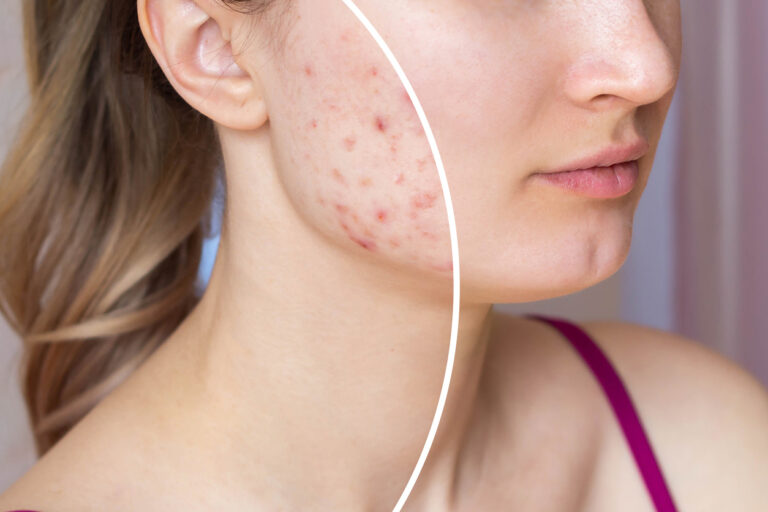
- Painful, cystic breakouts
- Recurring acne in the same areas
- Breakouts that don’t respond to drying treatments
Treating this type of acne like surface-level acne often makes it worse.
Why PCOS Acne Commonly Appears on the Chin and Jawline
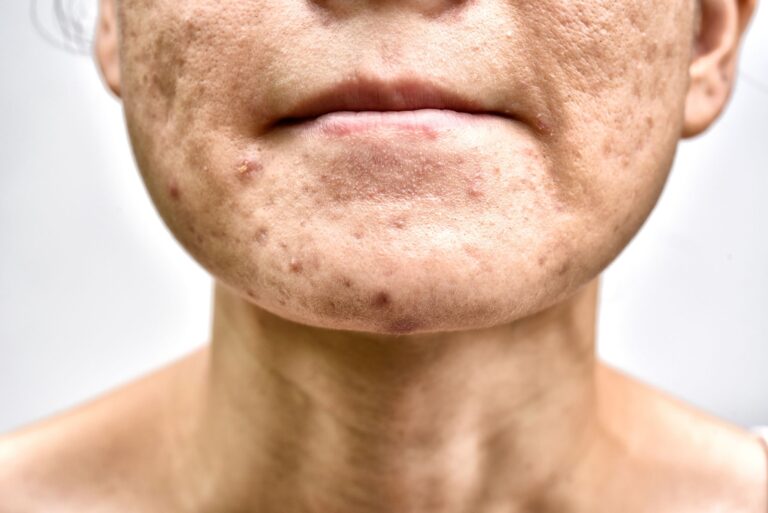
One of the most recognizable patterns of PCOS acne is chin and jawline breakouts.
This area is especially sensitive to hormonal fluctuations. When androgen levels are elevated, oil glands in this region tend to over-respond, leading to deeper, slower-healing acne.
That’s why:
- Breakouts feel “rooted” under the skin
- Acne returns in the same spots
- Healing takes longer
This isn’t a sign that your skincare routine is failing — it’s a sign that hormones are involved.
Why Harsh Acne Products Often Make PCOS Acne Worse
This was one of the hardest lessons for me.
When acne gets worse, the instinct is to fight harder:
- More exfoliation
- Stronger actives
- Stripping cleansers
But PCOS skin is often already inflamed.
Harsh products can:
- Damage the skin barrier
- Increase sensitivity
- Trigger rebound oil production
- Prolong healing time
Instead of calming acne, they keep the skin stuck in a constant stress response.
For PCOS acne, gentle and consistent almost always works better than aggressive.
The Role of Inflammation in PCOS Acne
Inflammation is a major driver of PCOS acne.
Even when pores are clear, chronic inflammation can cause:
- Redness
- Sensitivity
- Swollen, painful breakouts
- Acne that flares unpredictably
This is why focusing only on killing bacteria doesn’t work long-term.
When I shifted my goal from “clearing acne” to calming inflammation, my skin slowly became more predictable and less reactive.
Why PCOS Acne Takes Longer to Improve
Another frustrating part of PCOS acne is how long it takes to see results.
Because hormones are involved:
- Changes happen gradually
- Improvements come in phases
- Consistency matters more than intensity
For many people:
- Skin feels calmer before it looks clearer
- Breakouts become less painful before they disappear
- Progress happens over months, not weeks
This doesn’t mean nothing is working — it means your body is adjusting.
Why Skincare Alone Isn’t Always Enough
Skincare plays an important role, but PCOS acne often needs support from multiple angles.
Hormones, insulin sensitivity, stress, and ingredient exposure can all influence how the skin behaves. That’s why the same routine that works for someone else may not work for you.
For me, improvement came when I:
- Simplified my skincare
- Focused on gentle, clean ingredients
- Paid attention to hormone balance and inflammation
Supporting the body made skincare more effective.
What Helped Me Approach PCOS Acne Differently
Understanding that my acne was different helped me stop blaming my skin.
Instead of constantly chasing new products, I focused on:
- Reducing irritation
- Supporting the skin barrier
- Being consistent instead of reactive
That mindset shift alone reduced stress — which also helped my skin.
Final Thoughts
PCOS acne isn’t a personal failure or a lack of discipline.
It’s a signal.
When acne doesn’t respond to typical advice, it often means the root cause isn’t being addressed. Learning why PCOS acne is different can take a lot of pressure off — and open the door to a gentler, more effective approach.
If you’re struggling, you’re not alone. And you’re not doing anything wrong.
This post is based on personal experience and general information and is not intended as medical advice. PCOS affects everyone differently. Always consult a qualified healthcare professional for individualized guidance.




One Comment